

4 min read | March 15, 2026
“Is that a rat?”
I stood in the office doorway, confused.
The Science Building housed the rats across campus, but from the office doorway, I stared across to the student lounge.
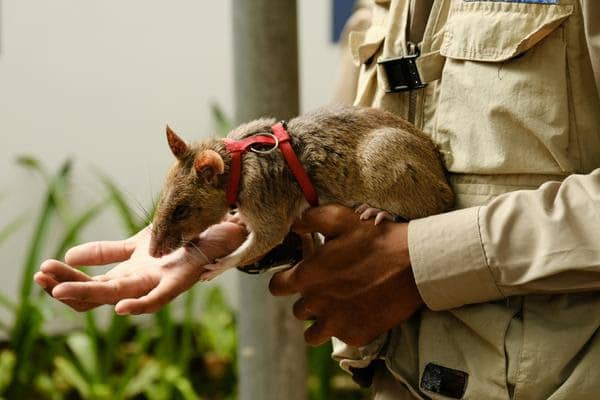
A student gleefully placed a rat on his shoulder and smiled in delight as it picked its way across to the other side.
The rat was in a harness. The harness was attached to a leash.
Clearly, they had a special relationship. I was both nauseous and curious. But the rat trend continued in the following weeks.
A colleague at a nearby campus described a couple who wanted a clinician to mediate who would get their pet rat — they both loved it and couldn’t reach a custody agreement. They wanted help with a visitation schedule.
Still another colleague leaped onto her desk when a client pulled a rat from their bag without warning. From her perch, she yelled: “Put it away! Take it home!”
The confused client tried to explain that rats were socially intelligent and harmless. It didn’t matter.
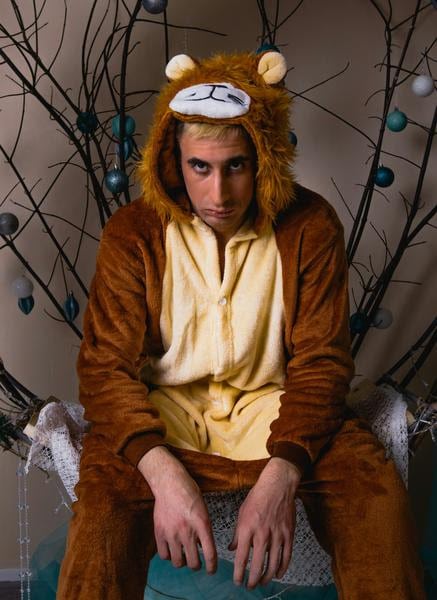
A different social signal arrived when students began showing up for sessions in full costume. They were members of the Furry Fandom movement — fans of anthropomorphic animals, characters that straddle the human and non-human realms — and it had grown by more than 1,800% in less than a decade. (Plante et al., 2023) There were annual conventions, but it wasn’t convention weekend.
I cringed since, truth be told, I hate certain costumes. Goofy at Disneyland, sports mascots, and anyone whose eyes I can’t see, I find unsettling. As a woman, I scan faces and body language constantly for safety cues, and certain costumes remove the very information I depend on.
Meanwhile, Pittsburgh had embraced Anthrocon, the fandom’s annual convention — citizens lined the streets for the furry parade, posed for photos, and the local media celebrated rather than stigmatized it.
To be fair to myself, their goals and roles were different.
But research would confirm what Pittsburgh seemed to understand: belongingness was the primary motivator for fandom participation — the need to find a community where non-normative identities were accepted rather than judged. (Plante et al., 2023) My younger colleagues embraced Furry clients intuitively. I struggled since the human signals I relied on disappeared entirely. The suit that made the student feel safe enough to show up authentically, which announced “I belong to a community,” made it hard for me to connect and do my job — I couldn’t track the nervous system.
When People Build What the System Fails to Provide
When I think back on it, the rats on leashes, custody disputes over rodent companions, and students navigating campus in costume were all clues that mainstream solutions were failing people, so they built what they needed. At every turn, people were self-organizing to fill unmet needs—a pattern the AI revolution may echo. For example, a prospective client opened a discussion this week with: “I asked AI about CPTSD, and I’ve got the symptoms.”
What strikes me is that this isn’t new. People have been gravitating toward whatever was available to fill relational gaps for decades — and technology’s offerings have gotten better. The question isn’t whether people will turn to AI for connection, since they already are. The harder question is what that tells us about everything relational that was missing before AI arrived.
Next issue, we’ll go there.
* * *
What signs do you see of AI changing the therapeutic experience? Reply — I read every response.
Reference
Plante, C.N., Reysen, S., Adams, C., Roberts, S.E., & Gerbasi, K.C. (Eds.). (2023). FurScience: A Decade of Psychological Research on the Furry Fandom. International Anthropomorphic Research Project.