
I help people who are struggling to break free from their past trauma to better hear their own voice and become the authentic person they want to be.
Welcome!
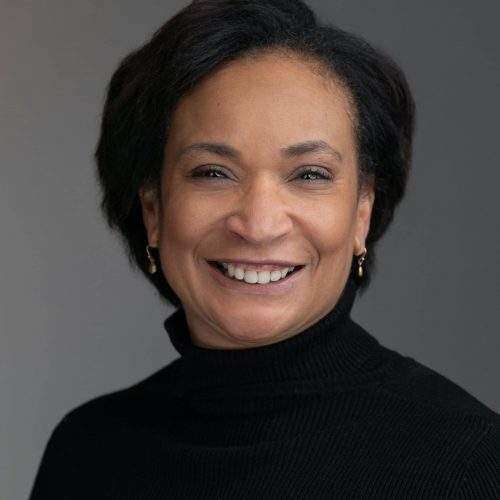
I’m Donna Hunter, M.A., CMHC, EMDRIA-Approved Consultant and veteran trauma therapist. After twenty years, I’m still inspired by clients ready to go from being trapped by symptoms to thriving.
You’re ready for change. But with hundreds of therapists out there, how do you choose? Let’s focus on important aspects.
My training:
I’ve trained with the creators and source institutions who’ve reached the highest levels in our industry. Therapies in my trauma-treating arsenal available to you include:
- Advanced EMDR applications with Andrew Leeds, Ph.D., who learned directly from Francine Shapiro
- Clinical application of attachment theory from Diana Fosha, Ph.D., creator of Accelerated Experiential Dynamic Psychotherapy (I maintain Level 2 AEDP Certification) and from The John Bowlby Centre in the UK
- Dr. Bruce Perry’s Neurosequential Model—a developmentally-informed approach to treating attachment disruption, featured in his book with Oprah Winfrey, What Happened to You?
- Deirdre Fay’s Becoming Safely Embodied, a somatic approach to treating dissociation that’s been applied in clinical settings including a major Boston hospital’s dissociation unit
- Dave Emerson and Jen Turner’s Trauma Center Trauma-Sensitive Yoga—a body-based approach that rebuilds safety and agency in the body after trauma, researched with Dr. Bessel van der Kolk (The Body Keeps the Score)
I’ve spent two decades learning what drives healing: body-based interventions that work with your brain’s capacity for change.
Proof it works:
As a therapist at a university counseling center, I worked with students whose trauma and neglect interfered with learning and daily functioning. Using these trauma and attachment-informed approaches, students regained the capacity to focus, regulate emotion, and engage with life. Many went from barely holding it together to graduating.
Now that you know how I sourced the best for you, AND proved it works, what can you expect?
How I work:
After baseline assessments (just like a doctor or coach would start with), we’ll create a personalized treatment plan using evidence-based practices. Since I work primarily with adults who experienced childhood trauma, neglect, or abuse, you’ll learn not just to manage symptoms, but to build capacity—for emotion regulation, for authentic relationships, for the life you want to live.
Ready?
I’m excited to hear from you.
Credentials and work experience don’t tell the whole story.
Here’s why I work this way…

EMDR - Ogden and Salt Lake area
EMDR for Cultural Healing
Here’s what neuroscientist Robert Sapolsky discovered about stress…
In his book Why Zebras Don’t Get Ulcers, Sapolsky showed that chronic social subordination creates measurable damage: elevated cortisol, cardiovascular disease, immune suppression, brain damage, and accelerated aging.
Here’s the key difference: Zebras experience acute stress fleeing predators, then recover. Humans in oppressive hierarchies? We never turn off the stress response.
Because when systems measure your worth by wealth, race, body size, or neurodivergence instead of inherent value, your nervous system stays on high alert.
And the messages—sexism, racism, ableism, classism telling you you’re “less than”—soak in like marinade.
I first saw this pattern as a child.
Growing up outside an Air Force base in the 1970s, I watched WWII survivors terrorized by aircraft overhead. I knew trauma mattered.
But I didn’t understand the deeper pattern—why some people got help while others suffered alone.
That understanding came through formal study.
Two Master’s degrees taught me that healing trauma means understanding systems, not just symptoms. A decade of studying environmental and structural factors showed me the invisible forces that shape who gets help. Wildland Fire Service consultation proved that stereotype awareness saves lives in high-risk situations. Rape recovery advocacy revealed how violence gets normalized. And twenty-five years in Utah showed me that context isn’t optional—it’s essential.
Here’s what that means in practice.
EMDR for cultural healing affirms your inherent worth by targeting false beliefs—beliefs transmitted by entire cultures until they soak into you.
Think about it this way: Pilots, firefighters, and builders account for geography. Why? Because ignoring terrain gets people killed.
Healthcare workers have the same duty of care.
And dismissing how sexism, racism, ableism, and classism shape mental health? That costs lives, too.
So I work with BIPOC clients navigating race-based stress and intergenerational trauma. Neurodivergent clients criticized for laziness. Disabled clients are accused of not working enough. Women harassed with calls of “your body, my choice.”
Because here’s the truth: Your symptoms aren’t personal weakness.
They’re understandable responses to real conditions.
Been told you’re “too sensitive”? “Too rebellious”? That you “focus on race too much”?
These are mis-evaluations.
Because healing from PTSD and complex trauma doesn’t happen in a vacuum. Your symptoms make sense in context.
Ready? I’m excited to hear from you.